

All listed firms were required to have at least one woman director on their boards from April 1, 2015, as per a Sebi directive.

Sebi had given an extension last year for PSUs to meet 25% minimum public shareholding rule
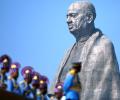
ONGC, Hindustan Petroleum, Bharat Petroleum, Indian Oil and Oil India listed the spending as part of their mandatory CSR commitment, but CAG noted that the Sardar Patel statue did not qualify for CSR funding.
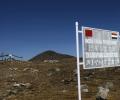
India has been rejecting China renaming places in Arunachal Pradesh, asserting that the state is an integral part of the country and assigning "invented" names does not alter this reality.

As many as 104 listed companies have fewer independent directors than mandated by the regulations, according to the figures from Prime Database, reports Sachin P Mampatta.

'Whenever markets rally, the IPO pricing gets aligned to the prevailing market conditions.'

'It is a worrying trend as we are not seeing too much fresh capital being raised for new projects, plants, expansion or diversification. It's just private equity or venture capital or promoters cashing out.'

Companies spent less money buying back their shares from the public last year than at any time since 2015. They announced buybacks of up to Rs 14,341 crore, show numbers from primary market tracker Prime Database. The total amount spent was Rs 13,597 crore. Both the amounts are lower than what was offered (Rs 39,564 crore) and spent (Rs 36,517 crore) in 2020.

Indian companies are now more confident about the execution skills of local banks.

It has been a slow 2022 thus far for the primary markets. In the last 8 months, only 16 companies have raised Rs 40,311 crore via the initial public offer (IPO) route, data from PRIME Database suggests. In comparison, 63 companies had raised a cumulative Rs 1.18 trillion via the IPO route in 2021. A large part of the funds raised in 2022 were on account of the two IPOs - Life Insurance Corporation of India (LIC) and logistics firm Delhivery - that raised a total of over Rs 26,000 crore between themselves.

In the past few months, 45 companies have signalled their intent to raise money through the institutional placement route.

But the ISI chief did not retire giving the impression that he has won General Asim Munir's trust, notes Rana Banerji who headed the Pakistan desk at RA&W.

Historically, it is only the third time funds raised through IPOs has crossed the Rs 10k-crore mark
As part of its efforts to strengthen customer protection, Reserve Bank is considering setting up a fraud registry to create a database of fraudulent websites, phones and various modus operandi used for digital fraud. Such a database will help prevent these fraudsters from repeating the fraud as the websites or phone numbers would be blacklisted, RBI executive director Anil Kumar Sharma said on Monday. "There is no definite timeline for setting up of the fraud registry.

Initial public offerings (IPOs) by start-ups are bringing cheer to investors and investment bankers alike. After food delivery company Zomato, Nykaa has issued the fattest pay cheque to the managers of its share sale -- Rs 148 crore, or 2.8 per cent of its issue proceeds of Rs 5,300 crore. In absolute terms, this is the second-highest amount paid to investment bankers for handling an IPO, while in percentage terms, it is the highest for large IPOs (>$300 million) in the last one year, shows an analysis of the data provided by Prime Database, a primary market tracker.

Managing the senior generals has proven to be quite a headache for General Asim Munir, even as he and his team of loyal henchmen labour hard to dispel the sense of unhappiness among the public about the army's overbearing presence and interference in matters 'civilian', notes Rana Banerji, who headed the Pakistan desk at RA&W.

Here's a look at how the new corporate governance norms will affect India Inc boardrooms.

Of the 80 new appointments, 51 women are becoming directors.

Stocks mutual funds had invested in had risen almost to pre-pandemic levels in March.

"But the BJP wants it to be done after Lok Sabha elections. The tenure of this Lok Sabha will end on 16th June and SBI wants to share the data by 30th June," Kharge said.

There is polarisation among sectors with IT and healthcare receiving the lion's share of FPI money in the past two quarters.

Though stocks backed by private equity investirs are likely to have higher governance standards, investors should do their own due-diligence, experts tell Sanjay Kumar Singh

While such buying could indicate confidence in the business, investors should do a comprehensive evaluation before getting into the stock.
Promoters of 517 companies have pledged nearly 46.35 per cent of their shares, the highest since the 2008 global financial crisis.

The Prime Minister also expressed concern over problems in implementation of MNREGA in Naxal-affected areas.

It is feared that data of around 3-4 crore patients could have been compromised due to the breach detected Wednesday morning.

Star Health and Allied Insurance's Rs 7,250-crore initial public offering (IPO), the third largest this year and eighth largest ever, just about managed to make it despite a poor response from investors, garnering just 79 per cent subscription, forcing the investment bankers to prune offer for sale (OFS) component. This is the second large offering after digital payments major Paytm this year to receive a lukewarm response from investors, a sign that despite the IPO frenzy investors are discerning when it comes to pricing. As Star Health didn't meet the profitability criteria, its IPO required a mandatory 75 per cent subscription from qualified institutional buyers (QIB).

The State Bank of India (SBI) on Wednesday told the Supreme Court that a total of 22,217 electoral bonds were purchased by donors between April 1, 2019 and February 15 this year, out of which 22,030 were redeemed by political parties.

High retail concentration in small companies; many left to fend for themselves in penny stocks

Expect corporate houses to raise funds via IPO in second half of this year.

Fund mobilisation by companies through equity and debt routes has dropped 20 per cent in 2022 to nearly Rs 11 lakh crore, as exuberance dwindled this year due to expensive credit avenues and volatile markets. The first half of 2023 could continue to remain challenging. The year 2021 was extraordinary for fundraising from the equity and debt routes, while 2022 has seen a slowdown in capital raising owing to elevated volatility provoked by unprecedented inflation globally and the Russia-Ukraine war.

Over 900 listed firms yet to comply with new Sebi requirement due in less than 90 days

Sri Lanka is going through the worst economic crisis since independence in 1948. A crippling shortage of foreign reserves has led to long queues for fuel, cooking gas and other essentials while power cuts and soaring food prices heaped misery on the people.

The expected interest rate hike in the US and the resultant volatility in the domestic secondary market could play a dampener to the over Rs 2-trillion initial public offering (IPO) pipeline in 2022. IPOs in 2022 look promising, with as many as 35 companies holding the Securities and Exchange Board of India's approval to raise roughly Rs 50,000 crore. Another 33 companies are waiting for the regulator's nod to raise around Rs 60,000 crore next year.
Foreign portfolio investors (FPIs) and mutual funds (MFs) have put in more money as anchor investors in initial public offerings (IPOs) in 2021 than any other year. FPIs' share of investments for the year stood at Rs 24,477 crore, nearly six times that put in last year and more than nine times the amount invested in 2019, the data from Prime Database showed. MFs have invested Rs 12,264 crore, four times than that invested last year and more than 10 times the investment in 2019. The total investment by FPIs and MFs put together this year is five times the amount invested last year. The amount contributed by MFs, however, is nearly half of that invested by FPIs.

Fundraising via initial public offers (IPOs) dropped 52.2 per cent to $147.2 billion in the first eight months of calendar year 2023 (CY23), suggests a recent report by GlobalData, a London-based analytics and consulting company. At the country level, the report suggests, India topped the charts with 152 transactions worth $3.8 billion during this period, primarily due to a higher number of SME IPOs, followed by the US with 99 deals totaling $16 billion, while China ranked third with 88 transactions worth $32.3 billion. "An analysis of GlobalData's Deals Database reveals that there were 750 IPO listings registered with an aggregate deal value of $147.2 billion in the first eight months of 2023 on the stock exchanges worldwide.

The initial public offering (IPO) market has come to a grinding halt due to sharp correction in the broader markets and uncertain outlook created by the Russia-Ukraine offensive. So far this year, only three companies have managed to launch their maiden share sales. In comparison, close to 10 companies were able to come out with their IPOs during the same period last year. Investment bankers say it will be challenging to launch a single deal in March as large institutional investors have turned extremely risk-averse and don't wish to commit any capital.

The dozen firms to have listed following their IPOs have seen an average listing day gain of 49 per cent. IPO applicants have made money on all the deals, barring two, which saw modest declines on listing day.
